


Mid-Valves and Base Valves
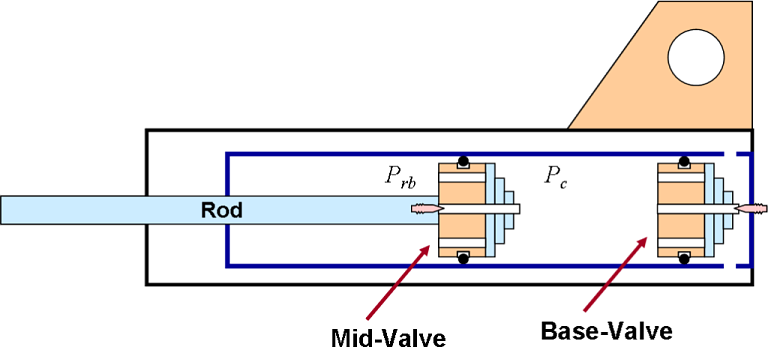
Two types of valves are used in suspension systems: mid-valves and base-valves. The base valve controls compression damping and the mid-valve controls rebound. On the mid-valve the check plate can be replaced with a valve stack to augment compression damping. ReStackor models both types of valves through specification of the input keywords BVc, MVc and MVr.
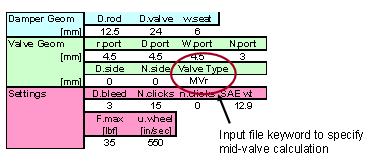
ReStackor pro input file specifies valve type through the keywords BV, MVc or MVr.

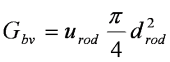
Base Valve (BV)
In the shock compression stroke the damper rod is driven into the shock body forcing oil out through the base valve. The oil flow rate through the base valve is defied by:
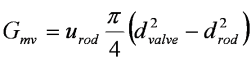
Mid-Valve (MV)
During the rebound stroke oil trapped between the mid-valve and damper rod is forced through the mid-valve. The flow rate through the mid-valve is defined by:
Difference in oil flow rate between mid-valve and base valve
For typical fork dimensions of drod= 12.5mm and dvalve= 24 mm operating at a velocity of 100 in/sec the oil flow rate through the base valve is 2.9 L/min and the flow rate through the mid valve is 7.8 L/min. The mid-valve flows nearly three times more oil. Due to the higher flow rates the mid-valve is capable of producing much more damping than the base valve and will have a shim stack configuration that is very much different from the base valve stack.
Damping force
The damping force produced by the mid-valve is created by the pressure difference between the compression and rebound face of the valve. During rebound the damping force is defined by:

During compression the total damping force is the combined force produced by the base and mid-valve:
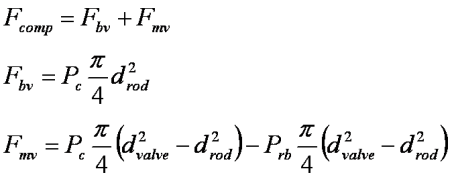
The differences in damping force produced by the above expressions require use of the MVr and MVc keywords in the ReStackor inputs so the code can figure out if the mid-valve is operating in the rebound (MVr) or compression (MVc) stroke of the shock.
